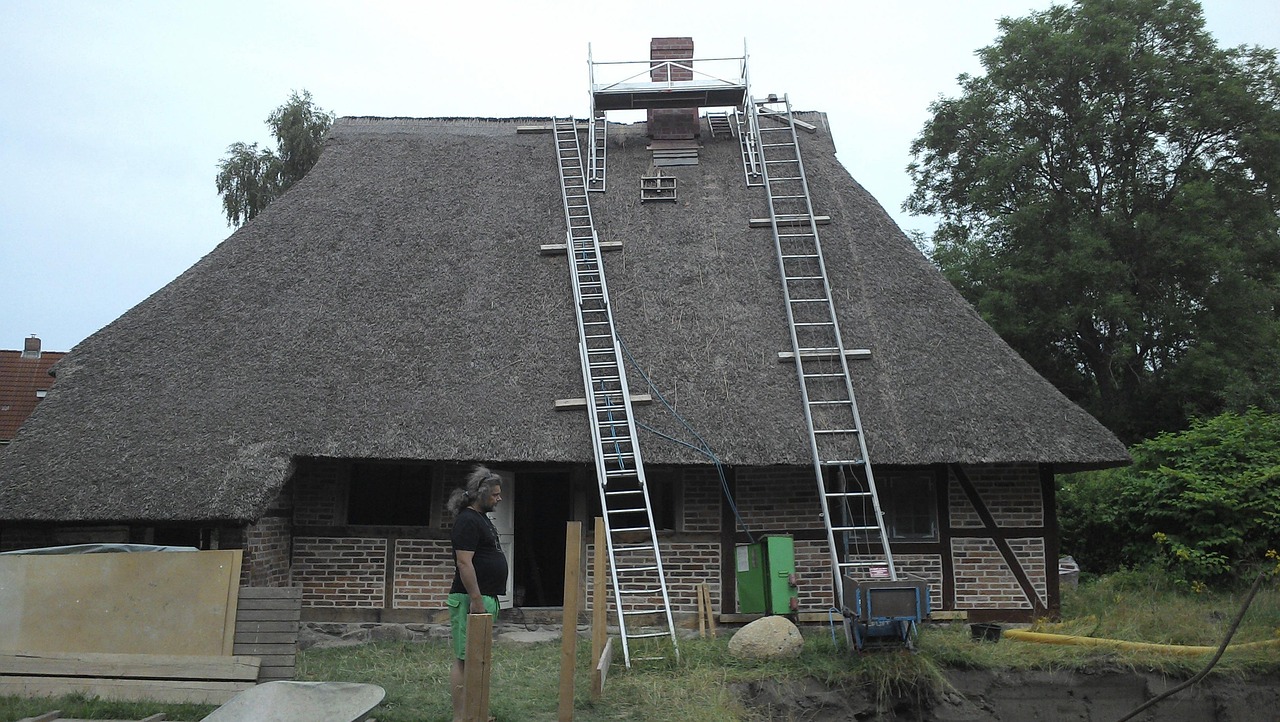
One spouse owns a house as separate property (bien propre). During the marriage the couple builds or renovates, and the marital community repays the loan. On divorce, the community is entitled to compensation (récompense, the sum owed between a spouse and the community when one has been enriched at the other’s expense). How much? Many liquidations stall on this calculation, somewhere between the amount repaid, the invoices, and the added value the works brought to the property. The decision of the First Civil Chamber of the Cour de cassation (the French supreme court for civil and commercial matters) of 23 May 2024 gives the formula and states what the expert has to measure.
The facts
A judgment of 9 September 2015 pronounced the divorce of spouses married without a marriage contract, and therefore under the French statutory regime of community of acquisitions. During the marriage a house had been built on land owned separately by the husband, and the community had repaid the capital of a loan in the sum of €29,123.19. On 23 March 2022 the Nîmes Court of Appeal set out the principles of the compensation and ordered an expert appraisal. In its reasons it excluded from the compensation the added value resulting from the husband’s own labour; in its operative part it included it.
The decision
The Cour de cassation quashed the ruling for contradiction between the reasons and the operative part (article 455 of the French Code of Civil Procedure) and decided the point itself, without sending the case back (Cass. 1re civ., 23 May 2024, appeal no. 22-18.911).
It restated the texts. Under article 1437 of the French Civil Code, a spouse owes compensation to the community only where a sum has been taken from it. Under article 1469, third paragraph, where the sum borrowed was used to improve a property that is still, at the date of liquidation, in the borrowing spouse’s estate, the compensation cannot be less than the remaining benefit (profit subsistant), which is determined according to the proportion in which the funds borrowed from the community contributed to the improvement.
It then fixed the formula: “The compensation shall be equal to the share of the added value brought to the property by the works carried out which results from the financing borne by the community, that is (A − B) × C/D” (translated from the French).
- A is the value of the property at the date of liquidation;
- B is the value the property would have, at the same date, without the works;
- C is the amount financed by the community, here the €29,123.19 of capital repaid;
- D is the total cost of the works at the time they were carried out, “materials and labour included, had they not been carried out by the spouse or by unpaid third parties”.
The added value due to the spouse’s own labour, that is to the work he did himself, is not part of the compensation.
What the expert has to produce
Two values at the same date. Value A is an ordinary market value at the date closest to the partition (article 829 of the French Civil Code). Value B is a hypothetical value: the same property, at the same date, in the condition it would be in had the works not been done. For a house built on bare land, B is the value of the bare building plot today. For a renovation, B is the value of the unrenovated house, established from comparable sales of properties in need of renovation. The Charte de l’expertise en évaluation immobilière (the French property valuation charter) requires these assumptions to be set out in writing (6th edition, November 2025, Title I, § 2.2, and Title III, § 1.2 on valuation assumptions).
A total cost, not a total of invoices. D is not the sum of the invoices that have been kept. It is what the works would have cost, labour included, had the spouse or relatives not done part of them themselves. I reconstruct that cost at the date of the works, from quotes, invoices for materials and building prices of the time. It is this denominator that reduces the community’s share where the spouse did much of the work with his own hands.
The proportion, then the added value. The report sets out the four quantities, the calculation and the result, as a range and then as a single figure, so that the notaire (French civil-law notary) handling the liquidation and the lawyers can discuss it item by item. The mechanism also works the other way, where separate funds financed works on community property (article 1433).
Why it matters
In a liquidation, the compensation calculated on the sum spent (€29,123.19 here) and the compensation calculated on the remaining benefit can differ by a factor of three, depending on how the market has moved and how much of the work the spouse did himself. The law takes the higher of the two where the funds were used to acquire, preserve or improve a property (article 1469, third paragraph). The valuation does not decide the law, but without its figures the notaire cannot apply the formula.
Further reading
The Market value page describes the valuation report in a divorce, its timescale and its fee; the Private clients page presents related situations. On the same theme: Divorce in France: home valued at partition, even if run down and Divorce in France: when to value the house, who pays the expert. The decision is available on Légifrance.
What next
Did the marital community pay for works on a house owned by one spouse alone?
I provide the three figures the notaire and the judge expect: the value of the property at the date of liquidation, its value without the works, and the total cost of the works as a professional would have invoiced it.
Free quote, by email or by phone. No commitment before the quote is accepted. Fees are never linked to the value of the property (Charte de l’expertise, Title I, §2.1).