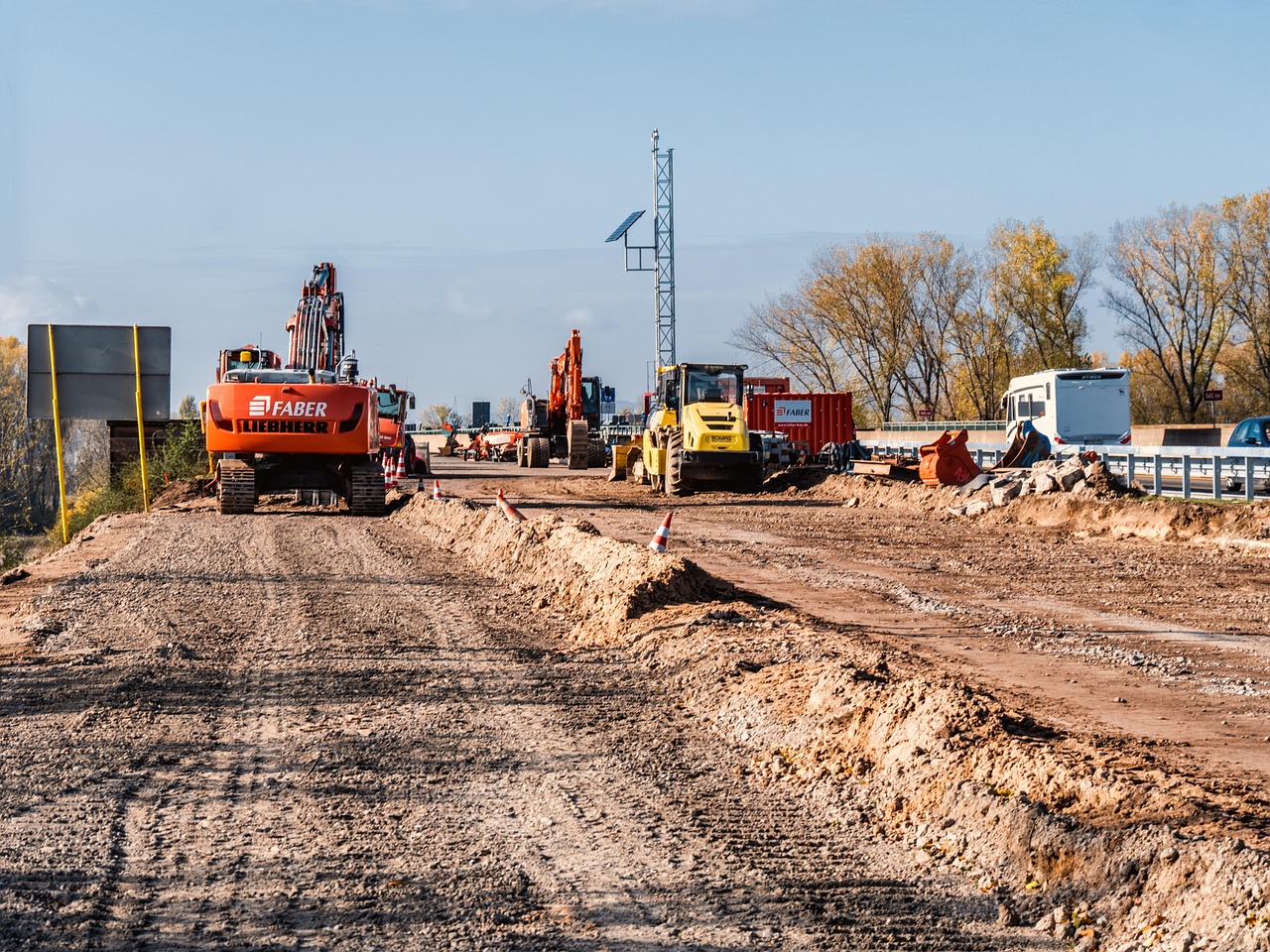
Compulsory purchase compensation in France covers “the whole of the direct, material and certain loss caused by the expropriation” (article L. 321-1 of the Expropriation Code, translated from the French). The wording seems broad. Three reported rulings of the Third Civil Chamber of the Cour de cassation (the French supreme court for civil and commercial matters) show where its limits lie and how it is applied. The first refuses any compensation for a building erected without a right to do so. The second admits a head of loss that is often overlooked when a business is partly evicted. The third clarifies what the judge may do when the expropriated owner does not respond to the offers.
An unlawful building on unbuildable land is worth nothing
In the Essonne department, south of Paris, a zone d’aménagement concerté (ZAC, a public development zone) had been declared to be in the public interest by an order of 1 August 2017. Among the land declared transferable was a 381 square metre plot on which a 20 square metre building had been erected without planning permission, in an area where building was prohibited. The expropriation order was made on 9 September 2019. The owner asked to be compensated for the building. The Paris Court of Appeal had fixed alternative amounts of compensation depending on whether or not the building was taken into account.
The Cour de cassation quashed that decision without remittal (Cass. 3e civ., 15 February 2024, appeal no. 22-16.460, reported decision): “Only a loss based on a right that is legally protected at the date of the expropriation may be compensated” (translated from the French). As no such right could be invoked, “dispossession of a building erected unlawfully and located on an unbuildable plot does not give rise to a right to compensation”, and it makes no difference that the time limit for an action to demolish it has expired. Compensation was fixed on the value of the bare land alone: 381 square metres at €12, that is €4,572, plus a reinvestment allowance of €914.40, giving a total of €5,486.40.
Partial eviction of a business can cause a distinct trading loss
A vehicle sales and repair garage occupied plots of which part was compulsorily purchased for the public land agency of the Île-de-France region. The Versailles Court of Appeal had rejected the claim for compensation for trading disturbance (trouble commercial), on the ground that it was already covered by the partial value of the business (fonds de commerce, the business as a going concern) and by the reinvestment allowance.
The Cour de cassation quashed that decision (Cass. 3e civ., 4 July 2024, appeal no. 23-15.027, reported decision). It recalled that “the evicted operator may claim compensation for the trading disturbance resulting from the expropriation, provided it is distinct from the loss compensated by the award of the total value of the business and by the reinvestment allowance” (translated from the French). It then held that “the partial eviction of a business may generate a loss affecting the activity that the operator continues in the premises outside the taking, distinct from the loss compensated by the award of the partial value of the business and by the reinvestment allowance, the burden of proving it lying on the operator”.
When the expropriated owner stays silent, the judge is not bound by the offer
In French Guiana, an urban community had compulsorily purchased part of a plot and offered €3,819 as principal compensation and €763.80 as reinvestment allowance. The expropriated company neither responded to the offers nor served written submissions. The Cayenne Court of Appeal nevertheless awarded €10,830 and €1,874.50. The acquiring authority argued that, in the absence of a response, the judge could not go beyond its offer.
The Cour de cassation dismissed the appeal (Cass. 3e civ., 9 October 2025, appeal no. 24-12.637, reported decision). Under article R. 311-22 of the Expropriation Code, the judge rules within the limits of the parties’ claims as they appear from their written submissions and from the conclusions of the Government Commissioner (commissaire du Gouvernement, the state valuation officer who gives an independent opinion to the expropriation judge) where the latter proposes a valuation lower than that of the acquiring authority. If the expropriated owner has not responded, the judge fixes compensation on the basis of the material available. The Court concluded that “where the expropriated owner has neither responded to the offers of the acquiring authority nor served written submissions, the judge may award compensation higher than the authority’s offer, provided it does not exceed the proposal of the Government Commissioner” (translated from the French).
What these rulings change in the figures
Check the right before valuing. Before valuing a building, an extension or an improvement, the report checks that it rests on a protected right at the date of the expropriation: planning permission, prior declaration, compliance with the local planning plan (PLU), or the expiry of the time limit for a building that could be regularised. A building without such a right is not valued, whatever its quality.
Separate the heads of loss. When a business is partly evicted, the report separates the partial value of the business, the reinvestment allowance, and the trading disturbance suffered by the activity that continues in the part retained: fall in turnover, reorganisation, loss of parking or display space, with the accounts in support. The burden of proof lies on the operator. Without documents, the head of loss falls away.
Always respond. The 2025 ruling rescues a silent owner, but only up to the Government Commissioner’s proposal. Costed and documented written submissions in response remain the only way to obtain compensation based on the real market. The Charte de l’expertise en évaluation immobilière (the French property valuation charter) devotes a paragraph to compulsory purchase compensation (6th edition, November 2025, Title III, § 1.20).
Further reading
The Compulsory purchase and pre-emption page describes the instruction before the expropriation judge, its timescale and its fee. On the same theme: Compulsory purchase in France: three recent Cassation rulings and Pre-emption price in France: valued as it stands at judgment. The rulings are available on Légifrance: 15 February 2024, 4 July 2024 and 9 October 2025.
What next
A compulsory purchase affects your land, your business or part of your premises?
I quantify every head of loss the law allows to be compensated, with its supporting documents, in written submissions the expropriation judge can follow, and I tell you before starting what will not be compensated.
Free quote, by email or by phone. No commitment before the quote is accepted. Fees are never linked to the value of the property (Charte de l’expertise, Title I, §2.1).