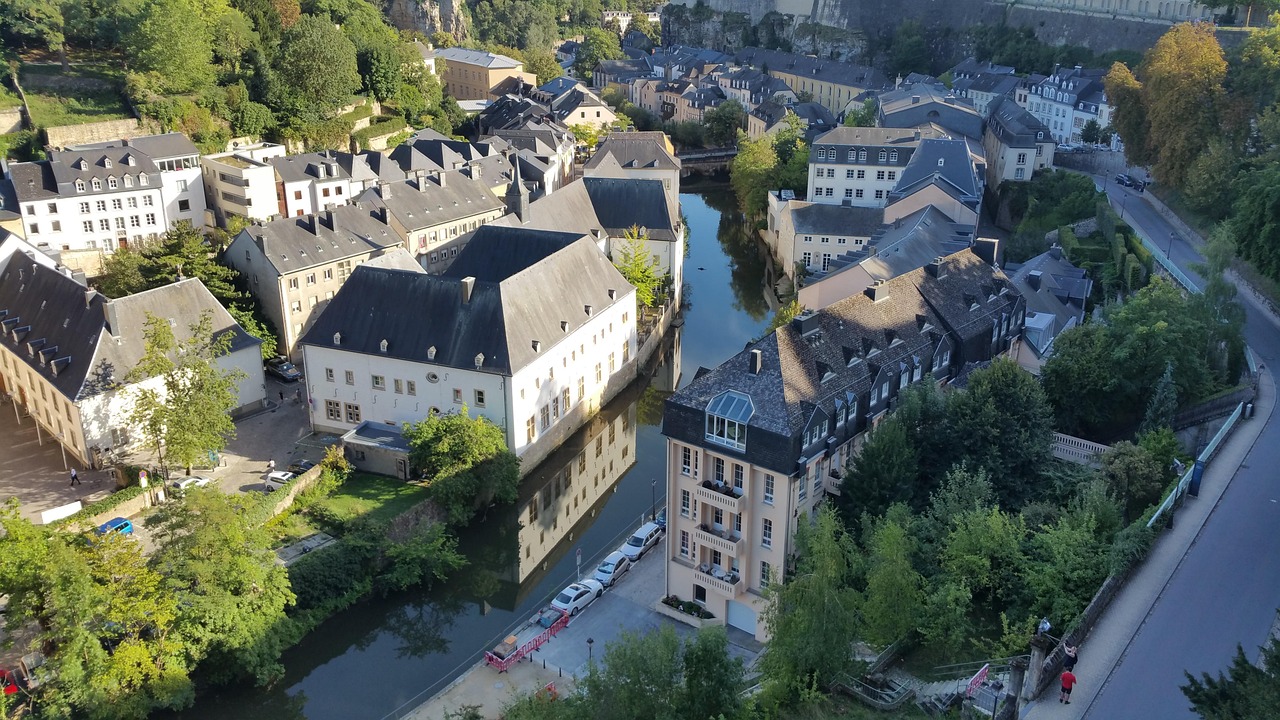
A plot of 8.5 hectares, zoned as building land or future development land under the PLU (local planning plan), but largely wooded and home to protected species. For wealth tax purposes, is it worth the price of building land? The owners argued that it was not, and that a prefectoral order of 2018 prohibiting clearing confirmed it. The Commercial Chamber ruled against them on 6 May 2026, for a reason of evidence that matters in every tax reassessment file.
The facts
The French tax authority took the view that the value declared for plots and buildings for the ISF (impôt de solidarité sur la fortune, the former French wealth tax, replaced by the IFI in 2018) for the years 2011 to 2014 was understated. After collection and a complaint, the taxpayers sought partial relief. They argued that any development project would have required a clearing authorisation (Forestry Code) and a derogation for protected species (Environmental Code, article L. 411-2), subject to an imperative reason of overriding public interest, and that a clearing ban had been issued in 2018. In their view, these constraints necessarily affected the market value.
The decision
The Cour de cassation (French supreme court for civil and commercial matters) dismissed the appeal (Cass. com., 6 May 2026, no. 25-13.442). It noted that the Aix-en-Provence Court of Appeal had found that the reports and opinions produced dated from December 2014 and later, that the clearing ban dated from 2018, and that, while the application of environmental rules could have made the land unbuildable despite the PLU, the prospect of a challenge remained “purely hypothetical” on the evidence. It also noted that the taxpayers had never produced any valuation evidence as at 1 January of the years 2011 to 2014, that under the PLU the land was then zoned as urban and future development land, and that no step had been taken during those years to contest that zoning.
The conclusion fits in one sentence: the taxpayers “did not prove the particular character of their property, such as to justify a departure from the principle of valuation by comparison with the actual property market at the time of the taxable event”. The tax authority was therefore entitled to adopt “a value corresponding to the reality of the market potentially open to the taxpayers”.
What the decision teaches
The taxable date governs everything. For the ISF as for the IFI or inheritance tax, value is assessed at 1 January of the year or on the day of death. Later documents may be used if they reveal a situation that already existed at that date; but this must be demonstrated, and here it was not. A valuation report produced in 2019 on 2011 values must explain, year by year, the factual and legal position of the land at each 1 January.
Comparison with the market is the rule, particularity the exception. The tax authority values by comparison with sales of similar properties. A taxpayer who contends that the property is different, because it cannot in practice be built on, must produce the evidence of that difference: dated ecological surveys, refused authorisations, registered easements, letters from the authorities. The PLU raises a presumption of buildability; it is for the taxpayer to rebut it.
Inaction works against the taxpayer. The decision notes that no step had been taken during the years in dispute to contest the PLU zoning. An owner who considers the land unbuildable has an interest in having that recorded in good time, by applying for a planning certificate (certificat d’urbanisme), challenging the zoning or consulting the State services.
For the expert, the constraint must be translated into value. The Charte de l’expertise en évaluation immobilière (French property valuation charter) defines market value as the price obtainable on the market at the reference date, taking into account the factual and legal situation of the property (6th edition, November 2025, Title III, §1.1), and requires assumptions and reservations to be written down (Title I, §2.2). Land zoned as buildable but burdened by environmental constraints is dealt with by analysing the probability of obtaining the authorisations and their cost, with comparables of similar land where they exist, not by a general assertion that it cannot be built on.
Further reading
The Market value page describes the valuation in the event of a tax reassessment, its timescale and its fee. On the same theme: disguised gift and French tax reassessment and SCI shares and wealth tax: two 10 % discounts, not a third. The decision can be consulted on Légifrance.
What next
The tax office values your land as building land when nothing can be built on it?
Classified woodland, protected species, clearing ban, easements: I document these constraints at the taxable date and quantify their effect on value, for the reply to the reassessment notice or the conciliation commission.
Free quote, by email or by phone. No commitment before the quote is accepted. Fees are never linked to the value of the property (Charte de l’expertise, Title I, §2.1).