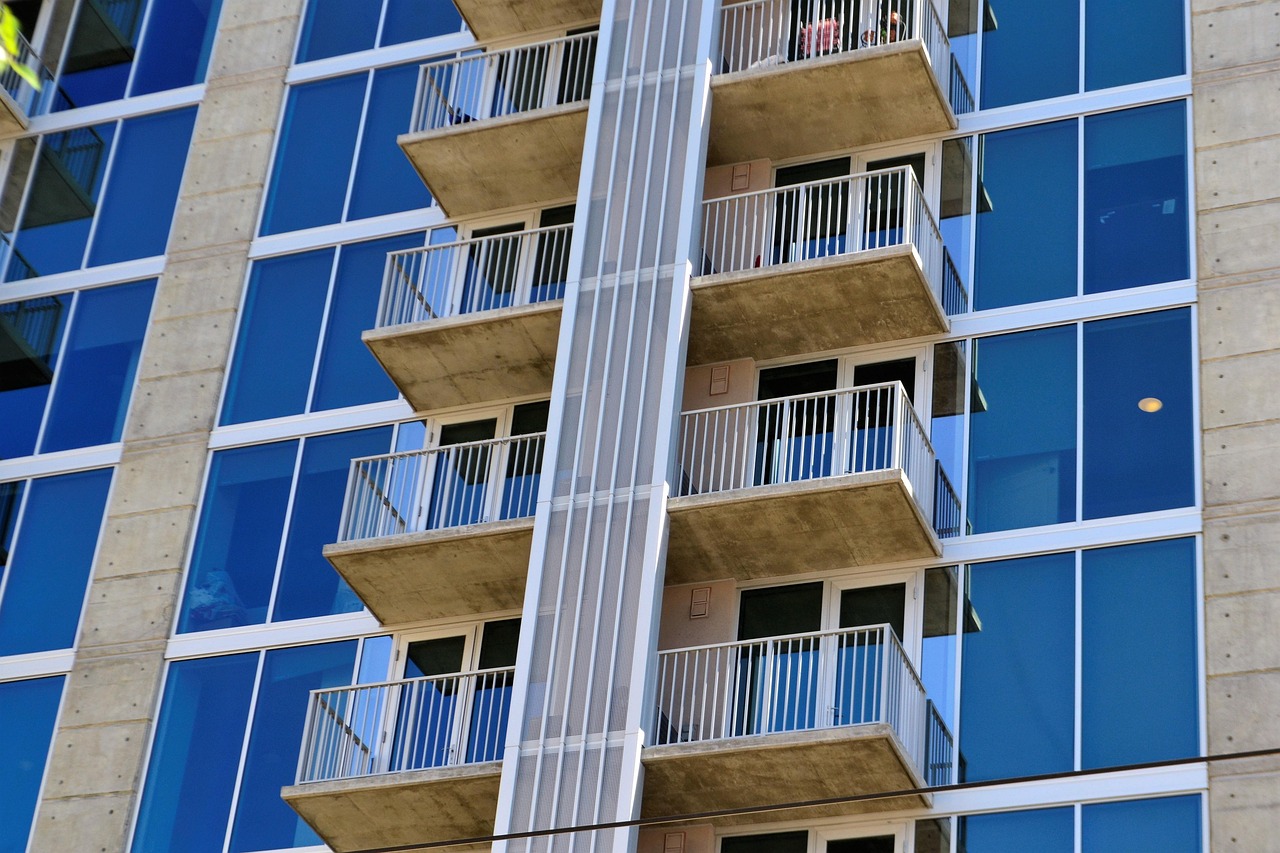
A gable wall built four metres from a block of flats, where the open space had been 7.58 metres. The neighbouring co-owners obtain on appeal compensation for the depreciation of their flats, between €16,100 and €19,480 each. The Cour de cassation (French supreme court for civil and commercial matters) quashes the ruling: the Court of Appeal did not examine whether the very high urban density of the area ruled out the abnormal character of the disturbance. The decision of 27 March 2025 reminds us that a loss of view cannot be valued out of its context.
The facts
An owner had obtained in 2001 planning permission to extend his villa, and built in 2010 after the challenges to the permission were dismissed. The owners of flats in the neighbouring building argued that the construction did not comply with the permission and that they suffered a loss of sunlight and a loss of view. After an expert appraisal ordered in summary proceedings, the MONTPELLIER Court of Appeal held on 27 July 2023 that the restriction of the view was an abnormal neighbourhood disturbance and awarded sums for the depreciation of the flats.
The decision
The Cour de cassation quashes the ruling on this point (Cass. 3e civ., 27 March 2025, appeal no. 23-21.076). The Court of Appeal had noted that the distance between the buildings had gone from 7.58 metres to 4 metres, that the construction “significantly” restricted the view from the balconies and that it was “indisputable” that this restriction affected the enjoyment and the value of the properties. For the Cour de cassation, these findings are not enough: the court had to examine, as the defendants asked, “whether the urbanisation of the area in which the buildings stood was not such as to rule out the existence of an abnormal disturbance”. The case is sent back to the NÎMES Court of Appeal.
The principle applied is that no one may cause an abnormal neighbourhood disturbance to others, now codified in article 1253 of the French Civil Code by Law no. 2024-346 of 15 April 2024. Abnormality is assessed against the normal inconveniences of neighbourhood in the place concerned: in a dense area, closeness between buildings is part of what is normal.
A useful reminder: a past disturbance is also compensated
A few months earlier, the same chamber had quashed a ruling that refused any compensation to the neighbours of a hypermarket, on the ground that the noise nuisance recorded in 2013 had disappeared by 2020. A person who suffers an abnormal disturbance “is entitled to compensation, even if it has ceased by the date on which the court rules” (Cass. 3e civ., 14 November 2024, appeal no. 23-20.880). In that case the neighbours also sought compensation for the loss of market value of their property.
What the expert takes from it
The urban context is part of the report, not a detail. Before putting a figure on a loss of value, the expert describes the zoning, the built density of the area, the applicable setback rules and what an informed buyer could have anticipated. An open view in a dense urban fabric is a precarious view, and the market partly prices that in. This is exactly what the Cour de cassation asks the trial courts to check.
The disturbance is measured. Distances before and after, heights, orientation of the openings, rooms affected, sunlight diagrams at the solstices and equinoxes. These measurements separate a felt inconvenience from a verifiable fact, and they serve the claimant as much as the defendant.
The loss of value is demonstrated by comparison. The accepted method is to establish the market value without the disturbance, then with it, the difference being the loss. The discount adopted rests on comparable sales with and without an equivalent nuisance, never on a flat percentage. The principles of market value are those of the Charte de l’expertise en évaluation immobilière (the French property valuation charter, 6th edition, November 2025, Title III, § 1.1) and of EVS 1 of the European Valuation Standards 2025; the report states its reservations when the construction is not finished (Charte, Title I, § 2.2).
Temporary disturbances are valued separately. Site noise, dust, loss of enjoyment during the works: these items are calculated over the duration of the disturbance, by reference to the rental value, and do not form part of the loss of value of the property.
Further reading
The Property loss of value page describes the loss of value report, its timescale and its fee. On the same theme: Abnormal neighbourhood disturbance: a loss of view is not automatically a nuisance and A building goes up next door: how to measure the loss of value of your house. The decisions are available on Légifrance: 27 March 2025 and 14 November 2024.
What next
A neighbouring building reduces your view or your sunlight?
I measure the disturbance (distances, heights, shadow studies), place it in its urban context and put a figure on the loss of value with comparable sales. The report also works in defence, for a developer or an insurer.
Free quote, by email or by phone. No commitment before the quote is accepted. Fees are never linked to the value of the property (Charte de l’expertise, Title I, §2.1).