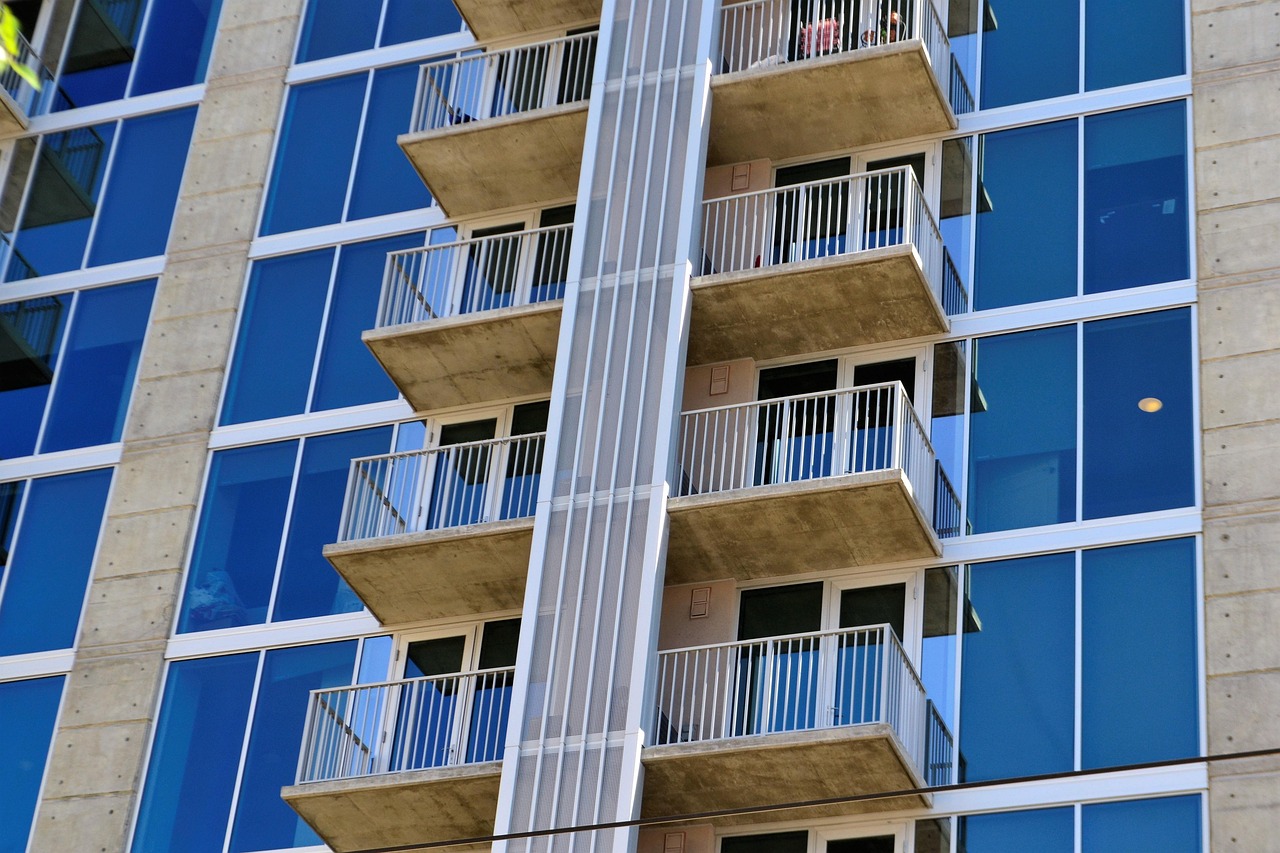
Two houses have just been built on the boundary of your land. You have lost the open view you used to enjoy, the neighbours’ windows overlook your garden, and you believe your property has lost value. Can you obtain compensation on the ground of abnormal neighbourhood disturbance (trouble anormal de voisinage, the French law of nuisance)? The ruling of the Third Civil Chamber of the Cour de cassation (the French supreme court for civil and commercial matters) of 9 November 2023 (appeal no. 22-15.403) answers no in a very common situation, and explains why.
The facts
The owner of a house saw two houses built on a neighbouring housing estate, on the boundary of her property. She sued their owners, relying on the loss of view, the creation of windows overlooking her land, the loss of privacy and the depreciation of her property. The Aix-en-Provence Court of Appeal dismissed her claim on 13 January 2022. She appealed to the Cour de cassation, which rejects the appeal.
The legal framework
The principle that no one may cause an abnormal neighbourhood disturbance to another was, at the date of the ruling, a rule developed by the courts. Since Law no. 2024-346 of 15 April 2024 it appears in article 1253 of the French Civil Code: the owner, tenant or occupier who causes a disturbance exceeding the normal inconveniences of neighbourhood is strictly liable for it. This liability does not require fault. It requires an abnormal disturbance, that is, one that goes beyond what each of us must put up with from our neighbours given the location.
Separately, the Civil Code sets the distances to be respected before opening direct windows onto the neighbouring land (article 678: 1.90 m). A building that complies with these distances and with its planning permission can nevertheless cause an abnormal disturbance; conversely, a real inconvenience can stay within the limit of normal inconveniences. Everything depends on the context.
The grounds of the decision
Loss of view is not abnormal in an area that is becoming built up
The Court of Appeal had noted that the property lies in a built-up zone, close to a bypass road, in a growing municipality destined to become more urban. In such surroundings, there is no acquired right to keep a view. The Cour de cassation approves: the loss of view does not, here, amount to a disturbance exceeding the normal inconveniences of neighbourhood.
The loss of privacy was neither specified nor persistent
Two elements weighed. First, the claimant did not establish the distance between the living rooms of the neighbouring houses and the boundary; the disturbance therefore remained abstract. Second, the planting of vegetation along the fence had partly remedied the loss of privacy in the garden and around the swimming pool. A disturbance reduced by concrete measures is no longer the same disturbance.
The inconveniences flow from the local planning plan, not from the neighbours
The buildings had become possible following a change to the local planning plan (PLU, plan local d’urbanisme). The Court notes that this regulatory change cannot be attributed to the owners of the new houses, who built in accordance with the rules.
The trial judges assess abnormality as a matter of fact
The Cour de cassation recalls that the existence and abnormality of a neighbourhood disturbance are matters for the trial judges’ sovereign assessment of the facts. It does not retry the facts; it checks that the Court of Appeal gave reasons for its decision.
What the ruling changes for valuing a loss
The urban context is part of the analysis. Before pricing a loss of value, the expert examines the zoning, the planning rules and the foreseeable evolution of the area. An open view in a zone where building is allowed was, from the outset, a precarious view; the market partly prices that in at purchase. This reasoning matches the definition of market value adopted by the Charte de l’expertise en évaluation immobilière (French property valuation charter), 6th edition, Title III, §1.1, and by EVS 1 of TEGOVA: that of an informed buyer, who knows the surroundings and their potential for change.
The disturbance is described with measurements. Distances between openings and the boundary, orientation of windows, height of the buildings, rooms affected, hours of sunlight lost: these data are recorded on site and on the plans. They turn a felt inconvenience into a verifiable fact. The ruling sanctions precisely the absence of these details.
Mitigation measures count. Hedges, solid fences, privacy screens: what has been done, or what can be done at reasonable cost, reduces the disturbance and therefore the loss. The expert takes this into account and, where needed, prices the cost of these measures as a component of the compensation rather than applying a blanket discount.
Loss of value is proved by comparison. An alleged discount is demonstrated by setting the property against comparable sales with and without the nuisance, or by analysing the criteria the local market actually pays for (view, aspect, privacy). A flat-rate discount, without references, does not survive adversarial debate.
When loss of view can be compensated
The ruling does not say that loss of view is never an abnormal disturbance. It says that it is not one in a developing urban area, when the disturbance is not precisely characterised. A building that breaches planning rules, an exceptional view that made up the very value of the property, or a measurable loss of sunlight in the main rooms can lead to a different outcome. Each case is prepared with these elements of fact, before any discussion of the amount.
Further reading
The Property loss of value page describes the valuation of a loss of value or a loss of enjoyment, its timescale and its fee. Two articles complement this one: does a new building next door make your house lose value and how to claim loss of enjoyment and the devaluation of your property.
What next
Has your property lost value because of a third party?
Neighbouring construction, hidden defect, wrong floor area, overpayment at purchase: the loss of value and the loss of enjoyment quantified with the method accepted by French courts.
Free quote, by email or by phone. No commitment before the quote is accepted. Fees are never linked to the value of the property (Charte de l’expertise, Title I, §2.1).